
What We Learn When Indigenous People Fight for their Land
On the protection of the animist spirit Tij Raja

Co-authored with Prashant Rahi
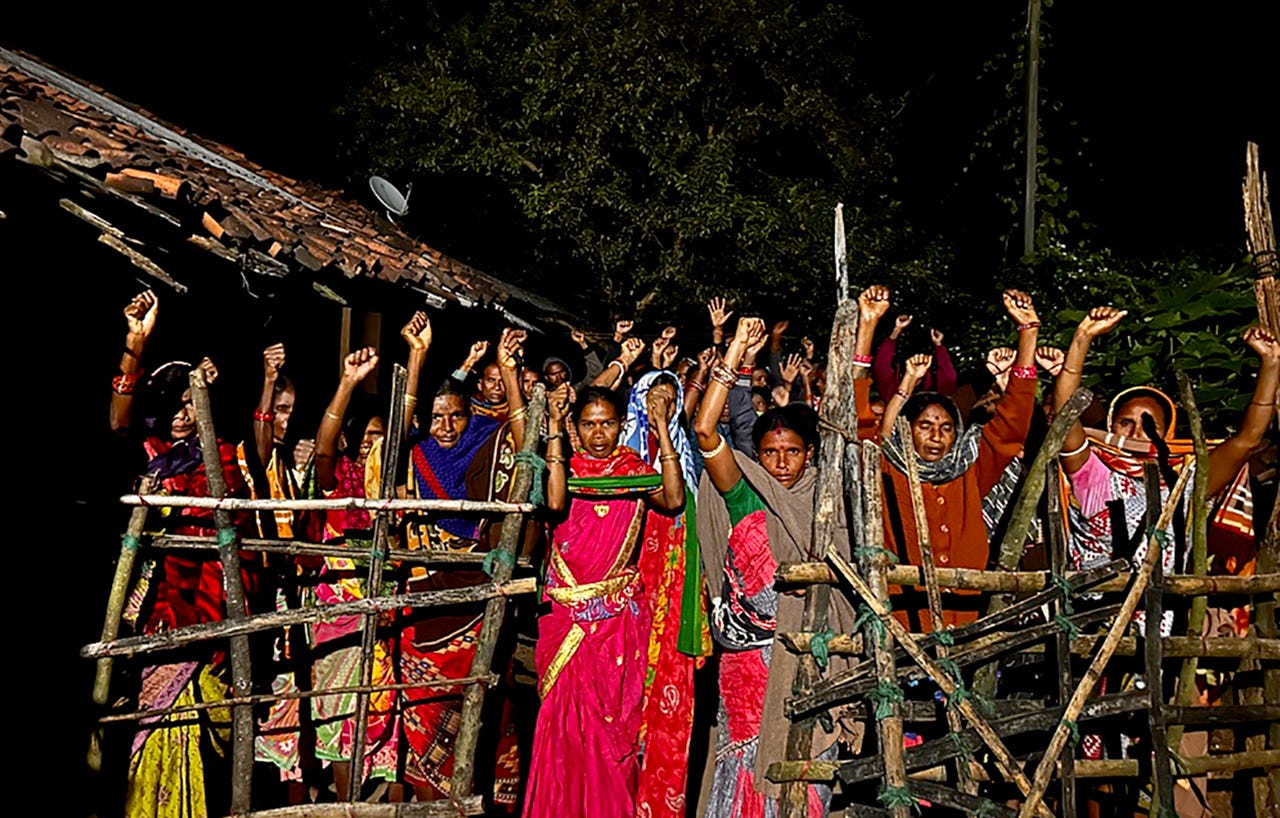
In the first week of April, tribal villagers in the forested mountains of Odisha, a state in India, came under attack by heavily armed police. In Kantamal, population 1000, a hub of anti-mining resistance in Odisha, the police entered the village at 3 am, firing rifles in the air, breaking down doors where families slept, beating and tear-gassing them. They then rounded up villagers for interrogation.
The illegal raid had one purpose: to terrorize. It was the second round of late-night attacks in a month, after 21 villagers, including ten women, were arrested in another nearby stronghold of the anti-mining movement.
What offense had the Indigenous tribespeople, called Kondh Adivasis in India, committed that authorities targeted them so? Over the last few months, they had joined with hundreds of other villagers to participate in a round-the-clock land defense blockade to prevent miners access to a sacred mountain called Tijmali.
The Kondh animists’ most venerated mythical ancestor, Tij Raja, is said to live on the mountain, his spirit the source of perennial streams that race from the peak through tropical forests. It is from the clean waters and unspoiled environment of Tijmali that Tij Raja’s Adivasi progeny, and their less numerous brethren, the Dom people, get food, medicine and, not least, spiritual sustenance. Theirs is a deep and abiding relationship with the natural world, based in subsistence agriculture and animist fervor.
But Mount Tijmali is also rich in bauxite, the precursor ore for the production of aluminum, demand for which is skyrocketing, driven by industrial growth worldwide, including the breakneck construction of aluminum-devouring data centers. Vedanta Resources, a $22 billion global giant headquartered in London and helmed by a British national of Indian origin, has long eyed the mountain as a prime site for a bauxite mine. Vedanta won the lease for what is called the Sijimali Mine Project in 2023 and now the company wants to proceed with the first tranche of forest clearance and begin digging.
The Kondh Adivasis and the Doms refuse to allow this to happen. “We are children of Tij Raja, how can we allow our Tijmali to be mined?” said villagers in a prepared statement during a public hearing in Odisha in 2023. “Tijmali is our soul. How can we live without our soul? Mining will destroy not just the streams but our identity. We shall fight and will not let Vedanta mine our soul.”
Together, the two communities form an integral Indigenous fraternity now resisting the onslaught of the state and the mining interests it serves. The blockade on Tijmali to stop Vedanta’s workmen from accessing the mountaintop has yet to be broken.
But how long can these people hold out, armed with axes, sickles and sticks, and bows and arrows, when faced with the monopoly on violence the state leverages against them? It appears the government of Narendra Modi has lost patience with these recalcitrants and is determined to end the blockade – even if it means killing a few of them, and arresting many others to fill the jails and clog the criminal courts.
Why does this matter? The broad context is the plight facing Indigenous people worldwide: industrial development of all kinds – road-building, oil and gas drilling, urbanization, and, not least, renewable energy and green-tech mining – now threatens the environmental stability of 60 percent of Indigenous lands in 64 countries, an area as big as Canada, the U.S., and Brazil combined.
And what of the vaunted claims of a “sustainable” future on the horizon for industrialism? It won’t be sustainable for tribespeople such as the Kondh and Dom. They will have to make way for the techno-industrial system as it attempts to green itself.
A recent inventory of thirty so-called energy transition minerals and metals (ETMs) – those resources needed to build out renewable electricity production to wean industrial society off fossil fuels – estimates that 54 percent of ETMs are located on or near Indigenous peoples’ land. Some 85 percent of lithium reserves, 75 percent of manganese reserves, and more than half of nickel, copper and zinc projects are located in the territories of Indigenous peoples. At least a third of ETM projects are occurring on, or near, Indigenous territory or farmers’ land where inhabitants face a combination of water risk, conflict and food insecurity due to this new industrial encroachment.
To be clear, the Indigenous are under siege by the industrial system, facing cultural, spiritual, and, in some cases, literal oblivion.
The Adivasi and Dom anti-mining protestors of Odisha offer a stirring example to tribespeople worldwide — and to the rest of us, too — of heroic courage in defense of soil, water, air, wildlife, biodiversity, biotic communities and human communities who live intimately connected with the natural world. They have modeled for the planet a true environmental defense – a defense that means putting bodies in front of the monstrous mega-machine of capitalism. More on the fight in Odisha soon…
Prashant Rahi is a veteran journalist at large in India who, in his own words, “associates with and reports about struggles of the toiling masses across the subcontinent, including indigenous peoples and other suppressed societies, confronting diverse forms of exploitation, socio-political oppression, state violence, and the denial of dignity and democratic rights.”